
One of the least known museums in Canada is the Canadian Museum of Immigration in Halifax. It is located at Pier 21, the maritime terminal that received and processed immigrants arriving by ship from Europe in the old days. Almost no one follows that route to Canada these days and the building has been converted into a unique museum.
Most of us will probably never have an opportunity to visit it. But there is one fascinating exhibit that can be seen online. It is the timeline of migration to Canada, that begins in prehistoric times and continues to this day. It is worth a look!
The immigration policy of this period was dominated by the need to populate the vast territories in the West and spurred by the construction of the transcontinental railway. The newcomers were mostly of English and French stock, but also from other ethnic groups valued for their farming skills, such as Mennonites from Russia and Icelanders. This wave peaked in 1913.
During this period, immigration slowed dramatically, because of the the concern about “enemy aliens” during and after WW1, drought in the Prairies and the Great Depression.
Immigration expanded dramatically during the decade following WW2, admitting large numbers from the war-torn European countries that also included the former enemies Germany and Italy.
A point system was implemented in 1967 that emphasized skills and education and de-emphasized cultural background. This led to a dramatic diversification of immigrant origins, gradually shifting from Europe to all other continents, principally Asia. (See the pie chart at the bottom) The point system, with many tweaks and changes over the years, is still in use today.
The largest wave of migration in history—by the proportion of immigrants to the preexisting population in a single year occurred in Canada in 1913. In that year, nearly 350,000 immigrants arrived, adding about 5% to the Canadian population in just one year. No other major nation has ever recorded such a sharp, single-year proportional increase from immigration as Canada did in 1913.
In recent years, the amount of immigration to Canada has been about 1.2% of its population per year, on average. This is less than Australia’s 1.65%.
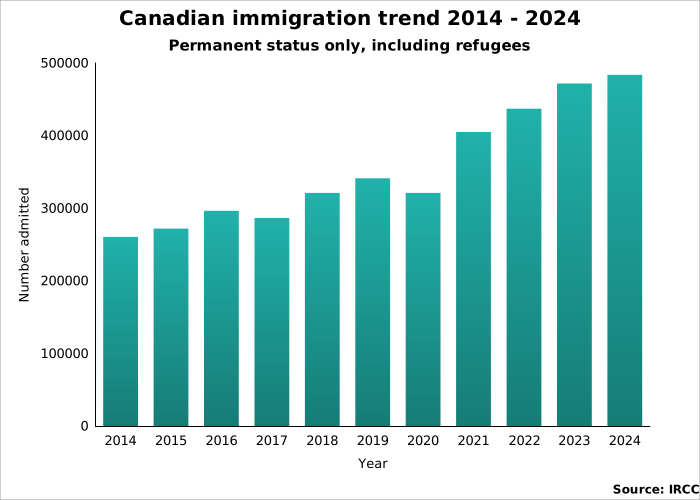
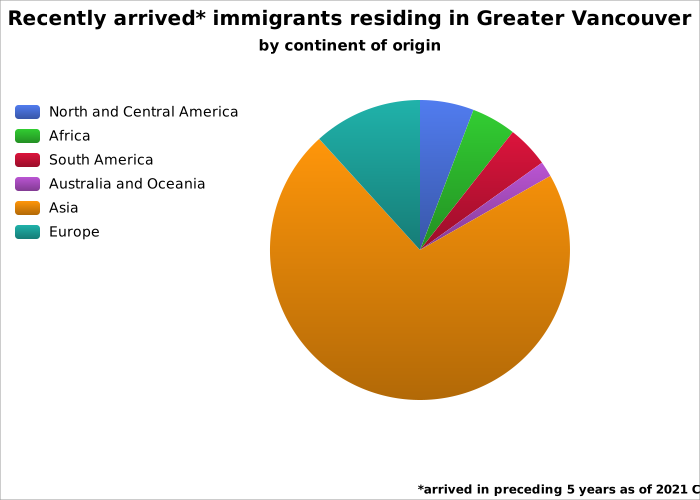
Statistics Canada provides an excellent interactive graphic tool that shows the Canadian Immigrant population by country of origin and by multiple other criteria. This is based on the 2021 census, the last Canadian census to date.
More recent data is also available from Statistics Canada and government reports to Parliament but it may be somewhat confusing and not as easy to interpret.


